

Hola amigos,
The more I study, the less i realize what I know.
This month for me has been all about future wellness, environment, and sustainability.
Why? Well, these will not only shape my job but also my and my family’s health.
Microplastics (<5 mm) and even smaller “nanoplastics” have now been detected in human blood, lung tissue, and the placenta, with concerns about interference with nutrient exchange and fetal development.
Today, I’ll share how to avoid it without spending extra money, just by shifting your day-to-day behaviors.
And before we start…
ATTENTION: Wellness is about to move to a boardroom priority.
Those who understand where this is heading will shape budgets, strategy, and influence.
At the bottom of this email, I’m sharing what’s coming next — and 3 real opportunities are hiding after studying 170 pages of wellness trends from the Global Wellness Institute. I am also giving you specific Market Research Prompts so you can act upon them right away.
Whether you work in the wellness industry or you aspire to pivot into it, this could change how you position yourself starting now — so read until the end.
Statistics
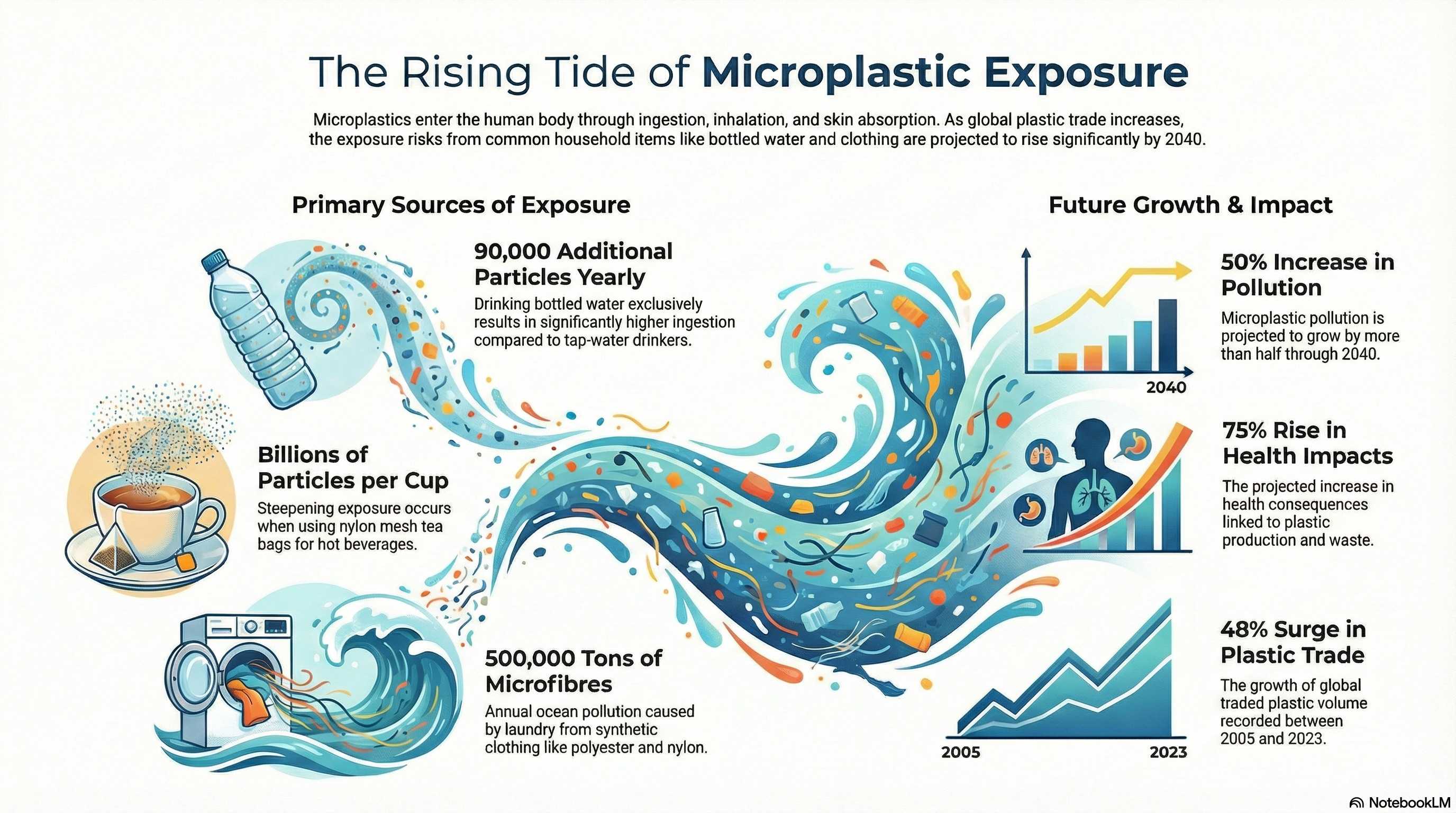
Microplastics reach us through three main portals: ingestion, inhalation, and skin absorption.
Here are the numbers that matter:
If you drink only bottled water, a 2024 study estimated you may ingest 90,000 more microplastic particles per year vs tap-water drinkers.
Nylon mesh tea bags are reported to release billions of particles into a single cup.
Synthetic clothing (polyester/nylon/acrylic) is ~60% of clothing materials, and laundry releases ~500,000 tons of microfibers into the ocean annually.
From 2005 to 2023, global traded volume of plastics increased 48%, and one report projects microplastic pollution will grow >50% through 2040, with health impacts from plastic production/waste increasing 75%.
Dangers
Once inside, microplastics can resist degradation, traverse biological membranes, lodge in organs, and carry other toxic chemicals—including bisphenols, phthalates, and PFAS—deeper into the body.
The report is clear: the full picture is still under investigation, but early findings raise legitimate concerns, including:
Inflammation + oxidative stress, with links to metabolic disorders, insulin resistance, and premature aging signals.
Endocrine and reproductive effects: additives like BPA/phthalates are endocrine disruptors, and a 2025 study reported microplastics in human ovarian follicular fluid, calling it an emerging threat to female fertility.
Cardiovascular/neurological risk signals: the report cites findings of microplastic fragments in carotid plaques and discusses blood–brain barrier penetration in experimental work.
The future
In 2024, 175 countries endorsed a UN resolution to draft a legally binding agreement to end plastic pollution by 2026, emphasizing prevention at the source.
The report boldly predicts that we will monitor and manage plastic exposure as a crucial indicator, just like we do with stress, sleep, or air quality.
Also: at-home testing kits are becoming more common, and consumers will want guidance on what results actually mean.
What to do about it
You need better defaults.
1) Nutrition: cut ingestion and upgrade defenses
The 3 swaps (high ROI):
Water default: Aim for filtered tap most days—especially if you’re “bottled-only.”
Heat rule: Don’t heat food in plastic; packaging and utensils shed particles during heating and reuse.
Tea check: If you drink tea daily, consider swapping away from nylon mesh tea bags.
The defense layer (food as resilience):
Dietary fiber may trap microplastics in the gut and support excretion.
Probiotics (Lactobacillus/Bifidobacterium) may bind toxins from plastic additives, reducing inflammation.
Antioxidants/polyphenols (e.g., vitamin E, quercetin, polyphenols) may help protect cells from oxidative damage signals.
Easy weekly target:
One fiber anchor per meal + one fermented food most days + one “color” per meal.
2) Sleep: reduce inhalation where you spend 7–9 hours
Synthetic fibers dominate household dust, and indoor concentrations are typically higher than outdoors—so ventilation and textile choice are underrated wellness levers.
Tonight’s 2-minute upgrade:
10 minutes of air exchange in the bedroom (window/ventilation)
If you’re replacing bedding anyway, move toward natural fibers over time
3) Exercise: keep training, just fix the “inputs”
Dermal exposure can occur via cosmetics/lotions and synthetic fabrics, and trace plastics can persist under chemical aliases.
Two simple moves:
For lower-sweat sessions (walks, mobility, strength): choose natural fibers when practical
Audit your leave-on products (the stuff sitting on skin all day)
Now, pay close attention,
90% of companies still treat wellness like a perk.
By 2030, it will be an executive function tied directly to revenue, risk, and performance.Below, I’m breaking down exactly what the wellness function of the future will look like inside every serious organization (in my opinion) — structure, priorities, and where budget will actually flow.
But that’s not the only value add today,
I’m also sharing three emerging opportunities based on the latest wellness trends data that are not public, not in the report, and not being talked about yet. These are my conclusions based on my analysisis.
These are positioning plays I came up with.
The kind that can shift a career path, open a new advisory lane, or lead to a multi-figure corporate contract if you move early.
If you want to be early where budgets and influence are going, the Wellness Leadership Institute edition is where that door opens.Full breakdown below
Access is currently less than 1 AED a day.